
Why food insecurity is an academic issue

Food insecurity has become alarmingly prevalent among students in Canada. Nationally, nearly 40% of post-secondary students experience some form of food insecurity. In Vancouver Community College (VCC)’s most recent student union survey, one in eight students reported accessing a community food bank in the last six months. One in nine students had difficulty accessing food for themselves or their families.
The Government of Canada defines food insecurity as: ‘the inability to acquire or consume an adequate diet quality or sufficient quantity of food in socially acceptable ways, or the uncertainty that one will be able to do so’. For students, this may mean skipping meals – but it can also mean relying on low-cost, low-nutrient foods to stretch their budgets. These hidden forms of hunger can significantly impact students’ physical health, academic performance, and mental well-being.
“When students are hungry or worried about their next meal, it affects their ability to learn,” says Clayton Munro, Associate Vice President, Student and Enrolment Services, VCC and Co-Chair of VCC’s Mental Health & Well-being Committee. “At VCC, we recognize the importance of offering long-term support for students facing food insecurity. However, tackling this challenge is only possible when different sectors of our community work together to help those in need. In recent years, VCC has expanded its food access initiatives thanks to generous community donors, the Student Union of VCC (SUVCC), and the VCC Foundation. Together, we’re building a holistic support system for students facing food insecurity.”
Recent initiatives include a food voucher program, giving students faster, more flexible access to food. The college has also increased the number of on-campus food pantries – known as Snack Shacks – and provides additional food support and holiday hampers in Indigenous Gathering Spaces.
Each year, VCC hosts its annual Food Resiliency Fair to normalize conversations about food access and highlight support available. Delivering in partnership with community organizations, the event provides a free, nutritious lunch for more than 400 students. It also includes workshops to offer students practical skills on how to make nutritious eating more sustainable and affordable.
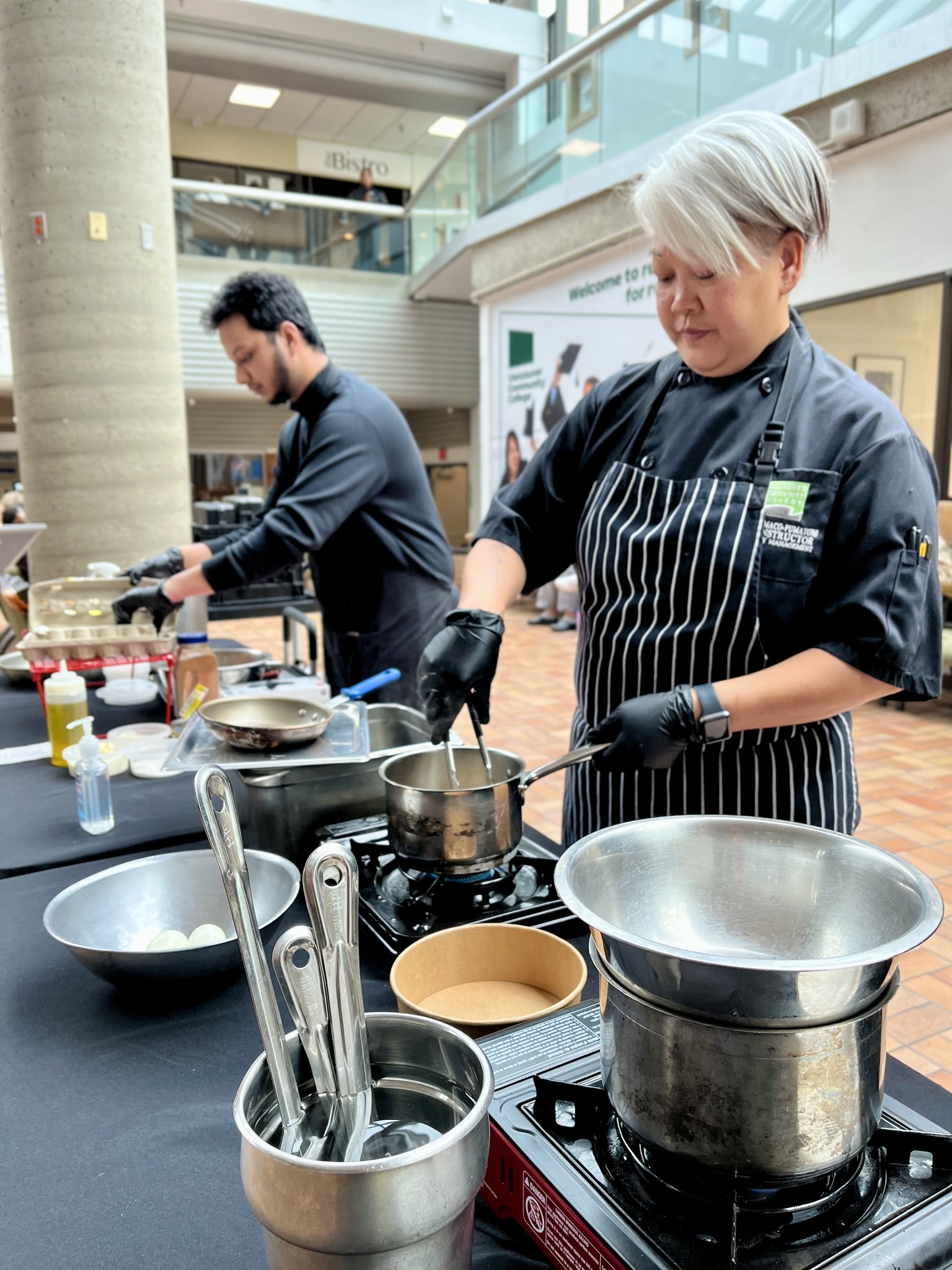
A cooking workshop at VCC's annual Food Resiliency Fair, which taught students how to cook meals on a $20 budget
Support from the VCC Foundation is imperative to the success of VCC’s food resiliency initiatives. As well as fundraising across the year, the Foundation launches a Giving Tuesday fundraising campaign each year. This donor support is what makes VCC's Food Resiliency Fair and our ongoing food programs possible; beyond providing immediate relief, donor contributions build a culture of care and community that empowers students to reach their full potential – they can focus on their education without the added stress of food insecurity.
If you’re interested in learning more, please visit: https://www.vcc.ca/about/foundation-and-alum/welcome/