Media Release
VCC launches new automotive training programs covering in-demand clean energy skills
- VCC is launching a series of new automotive programs that will provide learners with in-demand clean energy skills
- Enrolment is already open, with many programs beginning from September 2026 onwards
- The programs will help meet skills demand and improve operations in B.C.’s automotive sector
Vancouver – July 14, 2026: Vancouver Community College (VCC) is launching a series of new automotive programs to prepare B.C.’s automotive sector for the shift towards clean energy and sustainable technologies. Designed in partnership with industry, the new programs will ensure graduates enter the workforce with the skills needed to meet the growing demand for automotive technicians trained to work on hybrid and electric vehicles.
As part of its Zero-Emission Vehicles Act, the B.C. government aims to ensure 75% of all cars sold by 2035 are electric vehicles.[1][2] However, this poses a challenge for B.C.’s automotive industry, which currently lacks certified technicians who can work with EVs. By training local talent, VCC will help local automotive service centres recruit skilled technicians, thereby improving operations and lowering repair wait times across the industry.
“Now is an exciting time to be working in the automotive industry as we’re seeing a huge expansion in the roles and skills needed within the field,” says Brett Griffiths, Dean of Trades, Technology, and Design, VCC. “VCC partnered closely with industry to develop these programs. This has ensured our automotive training gives students hands-on experience and industry connections, helping them enter a field with strong future job prospects.”
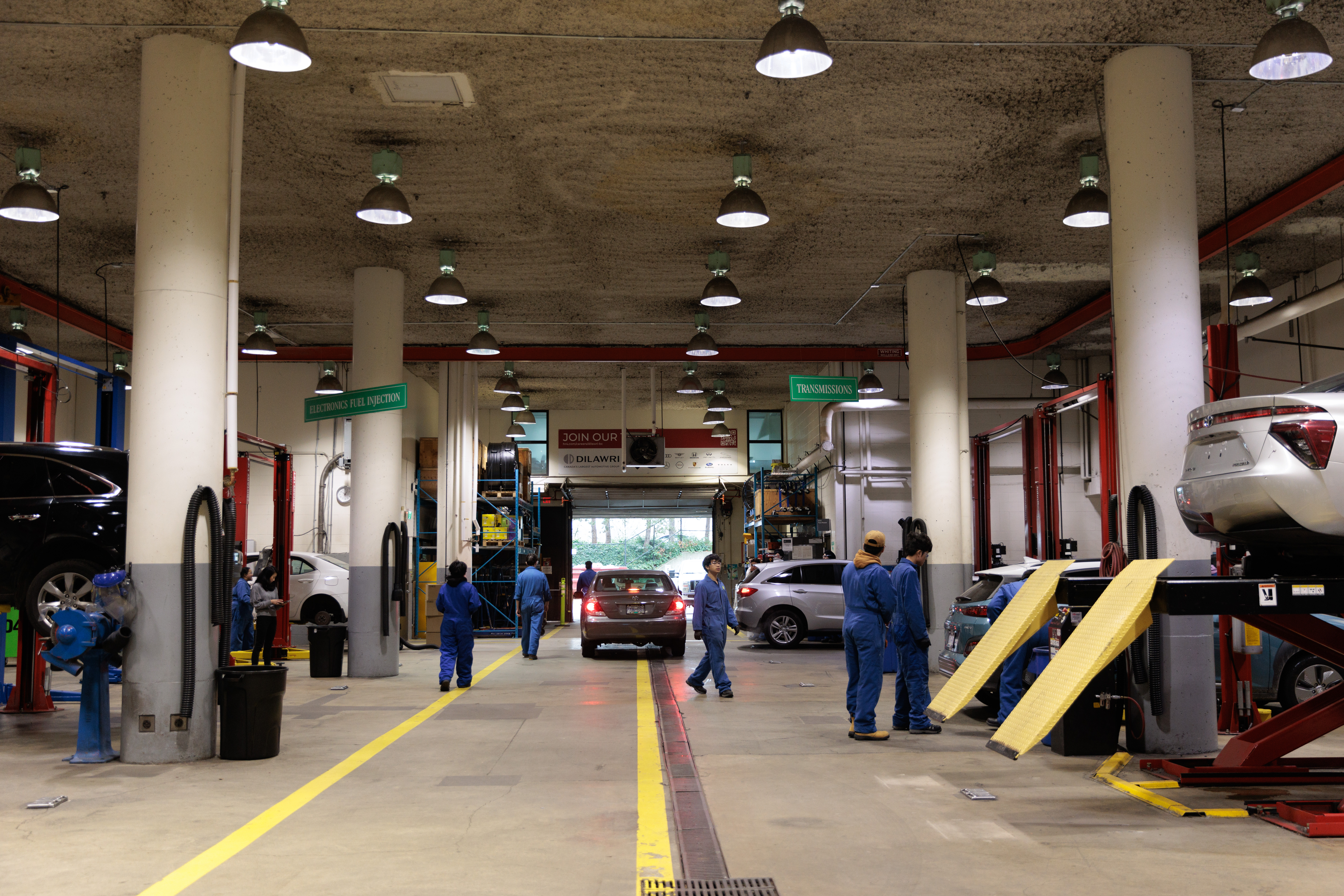
VCC’s new automotive programs will teach students the vital skills needed to work with clean energy technologies, including how to work with high-voltage battery systems, repair EV traction motors, the latest environmental standards, and how to source and stock parts for both traditional and modern vehicle systems. Programs offer students the chance to gain hands-on experience and industry connections.
The new programs are open to both new students and those already working in the industry who want to upgrade their skills or transition into working with electric and advanced vehicle technologies. Study options include a full two-year diploma pathway as well as short, flexible microcredentials that allow learners to quickly build specialized skills such as converting gas-powered vehicles to electric.
New programs include:
- Automotive Electronics Repair certificate
- Automotive Logistics and Service Operations – Zero Emissions diploma
- Electric Vehicle Conversion microcredential
- Zero Emissions Vehicle Service and Technology microcredential
Programs have intakes throughout the year, with many starting in September 2026.
Learn more at vcc.ca/clean-energy.
About VCC’s clean energy commitment
As workforce needs evolve, VCC is proactively creating programs that train students for future careers in clean energy. These new programs will produce workers who are technically skilled, environmentally conscious, and ready for long-term impact in vital industries.
As part of its commitment to clean energy training, VCC is expanding its Broadway Campus with a new Centre for Clean Energy and Automotive Innovation (CCEAI). Opening in 2027, the facility will provide students with access to modern equipment and learning environments designed for the future of automotive technology.
About Vancouver Community College
Vancouver Community College (VCC) is one of British Columbia’s largest and oldest public post-secondary institutions, offering more than 140 programs across a wide range of disciplines, including health sciences, hospitality, trades, design, and arts. With a focus on hands-on, industry-relevant learning, VCC is committed to providing students with real-world experience that leads to meaningful employment. Real learning for real change. www.vcc.ca/welcome
References
[1] BC Gov. Zero-Emission Vehicles Act. 2025. Available at: https://www2.gov.bc.ca/gov/content/industry/electricity-alternative-energy/transportation-energies/clean-transportation-policies-programs/zero-emission-vehicles-act [Accessed July 2026].
[2] BC Gov News. Updating zero-emission vehicle targets, expanding charging network. 2026. Available at: https://news.gov.bc.ca/releases/2026ECS0009-000355 [Accessed July 2026].